
This post is a complement to our Native Planting Workshop, happening on Sunday 5/16 at Big Bear Gear in Lambertville NJ, with plants provided by Nectar’s Home & Garden, just down the road in Titusville NJ. Even if you can’t make it to the workshop, this guide can help you make an informed decision about native tree and shrub species that will thrive in your home landscape, and how to use them to replace problematic exotic species that are widely planted in our area. We will also cover specific techniques for planting that will maximize the long term success of your plants.
Why plant native?
Low Maintenance: natives are already well adapted to our area, and will succeed with minimal interventions like fertilizing or spraying. Watering needs will most often be met by rainfall alone
Support Local Ecology: At a time when bird and insect populations are declining precipitously due to habitat and forage loss, it is critically important to support them in any way we can. It turns out the easiest way to do this is planting natives.
Many native bees, moths, butterflies, and birds have specific relationships with certain plants, and must be able to find these plants either to eat or to complete their reproductive cycle. Monarch butterflies and Milkweed species are the classic example, but almost any native plant you can think of will support one or more of these important species.
A Change in Landscape Philosophy
Many home landscapes are designed around exotic plants that will not be eaten by anything. On top of that, steps are often taken to kill anything that might be tempted to nibble.
If we move away from this destructive philosophy, we can support those creatures that can ONLY eat certain plants. This in turn will increase insect diversity and overall biomass, which then provides more food for living things all the way up the food chain.
Should you rip out your entire landscape and go fully native? Sure, if you want to! However, you shouldn’t feel pressure to do everything all at once. It is more important to get some natives into your property as soon as possible than to wait until you can afford to redo your entire landscape
Start by removing some of the worst invaders, and replacing them with the right natives. We will discuss below some of the most productive swaps to improve your landscape without changing its overall look and maintenance, while minimizing harm to surrounding natural areas. First, lets go over a few terms.
Native / Naturalized / Invasive
Native: a plant species that evolved in the context of a particular ecosystem, and remains in this context. This term can be applied at different levels, from Native to North America more broadly, down to Native to Hunterdon County NJ specifically. In New Jersey, we are fortunate to have one of the highest diversities of native species in the country, including some that can only be found in our state.
Naturalized: a plant species that is introduced to another ecosystem to which it is well adapted, and can easily thrive without cultivation (Ex: dandelion, daffodil)
Invasive: same as above, but it also spreads aggressively and crowds out natives, changing the ecology of areas where it is introduced (ex: wisteria, autumn olive)
Species / Cultivar / Hybrid
Species Natives: Species natives are seed grown, and exhibit variation from one individual to the next. These are the most authentic and offer the most ecosystem services, because they contain a wider variety of genetic material from the species (ex: seedling dogwoods present on property, plants purchased from Bowman’s Hill Wildflower Preserve)
Cultivar: a cloned selection of a particular individual within a native population that exhibits certain desirable traits. Cultivars are true natives, and have the advantage of being selected for success in a landscape context (good blooms, fall color, growth habit, etc) but the drawback of being genetically identical to one another (ex: “Blue Muffin” Arrowwood Viburnum)
Hybrid: Sometimes native species are crossed with non native cousins from the same genus to produce desirable traits that may not be naturally present in the species. These still provide some ecosystem services, but generally do not produce fertile/true offspring and therefore will not integrate into the native landscape as well as the above. They are still far superior to an invasive exotic. (ex: Anise Hyssop, Agastache “Blue Boa”)
Common Invaders, and What to Replace Them With
These plants are still widely sold by garden centers, but they should never be purchased for any reason, and if you already have them, we implore you to consider replacing them with more appropriate native species.

Callery Pear – This tree does have beautiful white flowers in the springtime, but that is its only positive trait. It quickly invades unmown areas nearby, and will become the dominant tree species within a few years if left unchecked. It also has weak branches that are prone to storm damage, and smelly flowers.

Native Replacement: Flowering Dogwood – More interesting blooms and a stronger and more graceful growth habit make this classic native an easy choice.

Japanese Barberry – This prickly suckering shrub does have beautiful copper/red foliage and its berries are liked by birds, however it has quietly overtaken much of our local Sourland ecosystem, becoming one of the dominant understory species, along with multiflora rose. In addition to crowding out beneficial natives, it is also a perfect habitat for various species of ticks, and has been shown to reduce overall insect diversity in areas where it is dominant.
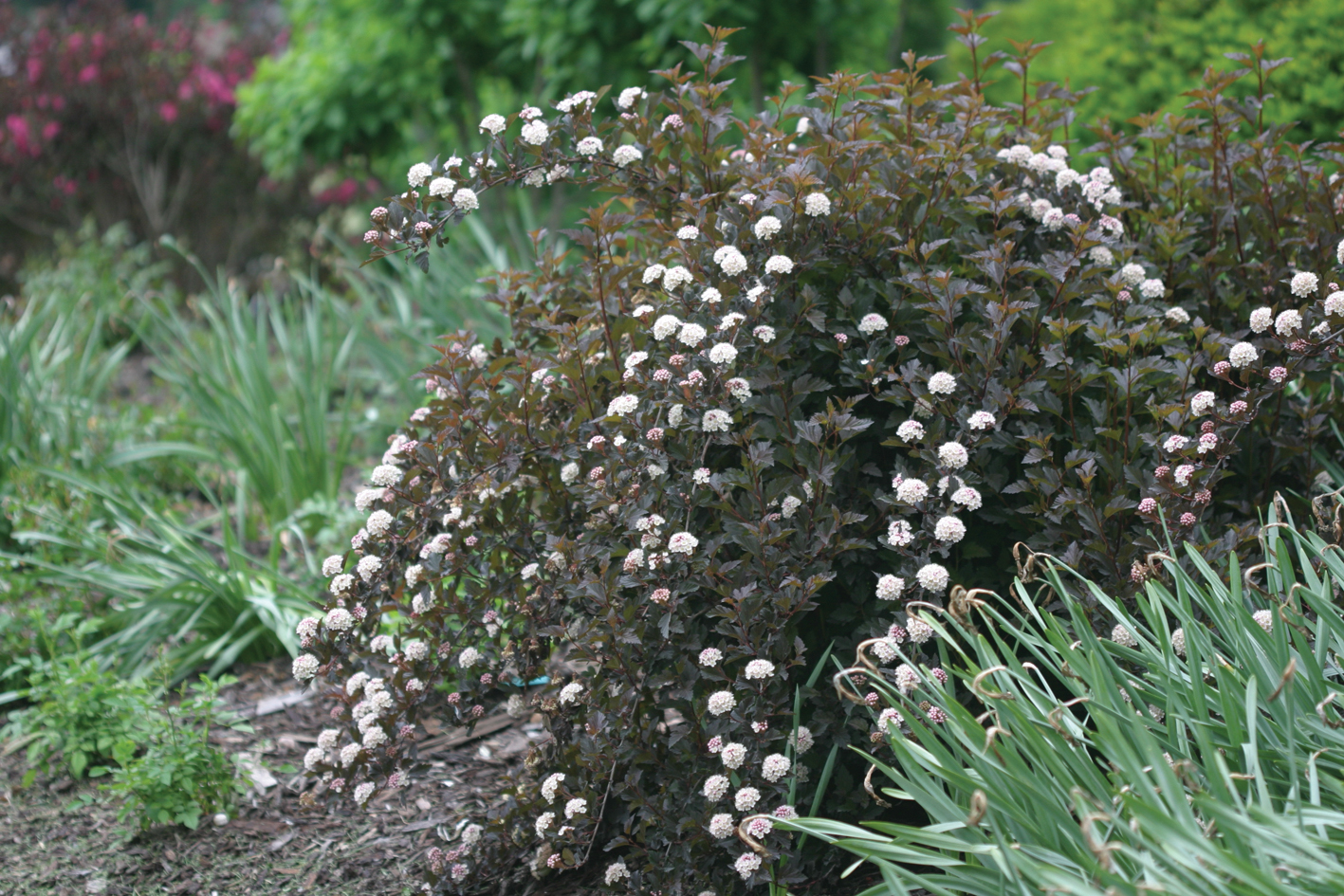
Native Replacement: Ninebark – There are numerous cultivars of this unique native that can be used similarly to the various barberry varieties. Its flowers are even showier, and it supports beneficial insects rather than disease carrying ticks. It can be shaped after flowering, or allowed to grow naturally as shown above. We will be planting the “Lady in Red” selection at Big Bear Gear.

Evergreen Option: Inkberry Holly – This versatile shrub is a native boxwood lookalike whose flowers, though inconspicuous, provide a food source for native bees. Its black fruits add a unique look in the fall, and nourish songbirds through the winter months. Inkberry is a great replacement for the barberry, boxwood, and japanese holly that are common in foundation plantings

Burning Bush – This shrub is widely planted for its brilliant red fall color, but is another one that is liable to escape from its planting area and establish itself in natural areas. It is a prolific seeder and can create a dense thicket if not carefully maintained

Native Replacement: Highbush Blueberry – There are many cultivars available of this shrub, and while it is primarily thought of as a food plant, its habit and fall color are similar to burning bush, if not better. It has pretty little white flowers in the spring, followed by the berries (loved by all, from humans to birds to animals), and a brilliant red display in the fall.

Wisteria – This vining plant is undeniably beautiful, but it can be extremely destructive if not properly controlled. Not only can it threaten the structural integrity of buildings it is grown upon, it can quickly carpet natural areas, block access to people and animals, and climb hundred foot trees and strangle them to death. It is particularly difficult to eradicate once established. The photo above shows one of the only appropriate ways to grow wisteria: supported on a masonry or metal structure with very little soil around for its seeds to drop on and become established. The specimen shown is quite old and has been carefully pruned multiple times per year to keep it from growing onto the roof of the building or into the windows (yes, it can do that). If you cannot commit to this care regimen, please do not plant wisteria. Here at Big Bear, an area of roughly a quarter acre was 100% covered in only a few years. The following photos show the state of the site when A Garden In Thyme was called in to assist:


As you can see, a beautiful flowering vine, once escaped, is no longer very beautiful. Unfortunately there is not a native vine with quite the same type or color of flowers, but we do have a beautiful vining native that can be considered for replacement, and it is not nearly so destructive.

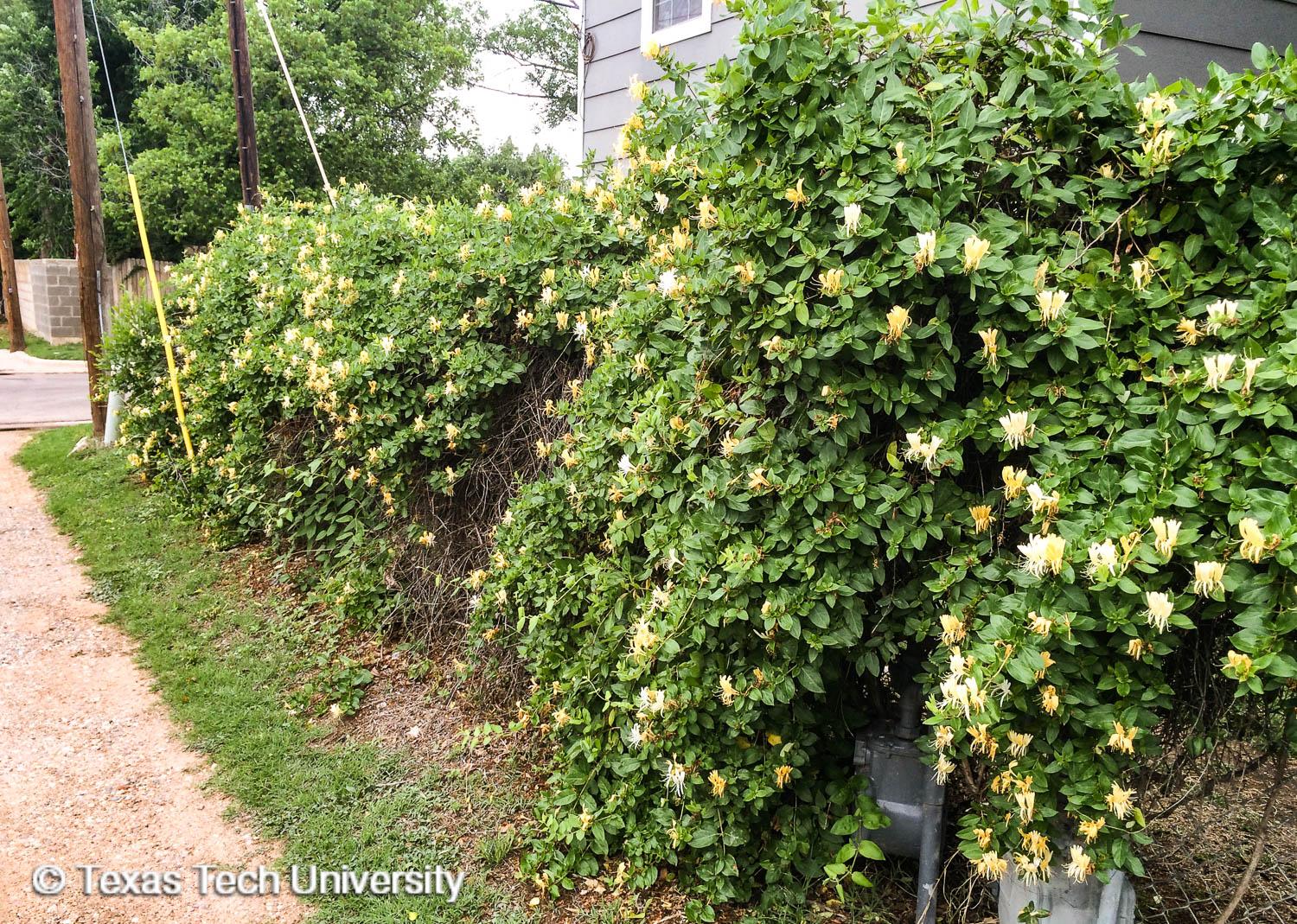
Native Replacement: Coral Honeysuckle – This native honeysuckle is a favorite of hummingbirds, and also serves as a good replacement for japanese honeysuckle, another common invasive
Other Common Invasives Found at this Site
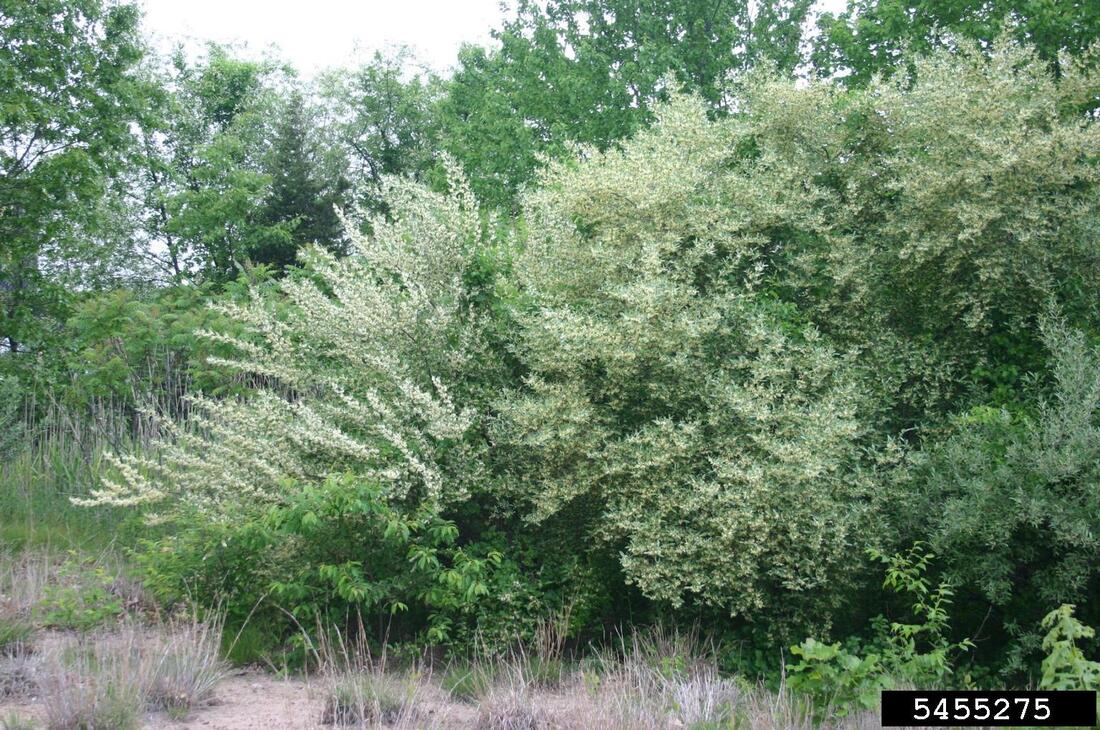
Here at Big Bear Gear, we have been tasked with clearing an area that was once a hillside garden of sorts, but after some years without a management plan, was taken over by a cohort of invasives. Wisteria was the major culprit, crowding out and strangling most of the woody natives that once populated the hill. A lone dogwood and black cherry were among the few natives that barely survived the onslaught. The wisteria patch did serve as a nurse plant for some other common invasive trees and shrubs that are repeat offenders in the Sourland eco-region. These species easily resprout when strangled or cut and form colonies by suckering and/or vining.

How to Plant Trees and Shrubs
Once an area has been cleared of invasives, there must be a plan for how to maintain it so that they do not simply reestablish themselves. By replacing with native species, you can fill the ecological void left by the removed species, and make it harder for them to come back. To optimize success of your native tree and shrub plantings, here are a few rules of thumb:
Dig the Hole
- Should be about the same depth as the nursery pot or root ball
- Width should be at least double that of the pot
- Break up soil at the bottom of the hole a bit
- If it is very dry, pre water the hole before adding the plant
To amend or not to amend?
- With natives, the goal is to have them thrive in the natural condition at your site
- Making the soil right around the roots too rich and inviting may ultimately stunt growth because the plant will not extend its roots out into the surrounding soil
- It is better to select a plant based on your soil type than to try and modify the existing condition
- Organic material such as compost or leaf mould can be mixed into the fill soil to lighten it up if needed
- Some of our acid loving natives can benefit from some holly-tone and/or peat moss mixed into the fill dirt
Prepare the plant
- Examine the roots
- If plant is balled and burlapped, it is best to remove these wrappings
- Roots that wind around the pot in a circle will continue to grow in this fashion, and can hurt the plant by girdling it
- Unwind or prune off girdling roots
- Rough up the surface of the root ball with gloved hands to loosen the roots and encourage them to spread outward
- If the plant is severely root bound, use a soil knife or shovel to cut an “X” or “/” into the base of the root ball, then pry apart so the roots splay outwards.
- Brush excess soil off the top of the root ball and into the planting hole
- Locate the root collar (this step is most important for trees)
- The root collar is where the main stem flares out and branches off into the major roots. Often you will find it submerged in the soil of a nursery pot or root ball.
- Trim off any small rootlets that are above the root collar
- This part of the tree should be planted at, or slightly above the finished grade level for optimum health
Plant it!
- Place your plant in the hole and confirm it is not sitting too high or too low
- Dig deeper, or backfill to the appropriate height if needed
- Rotate the plant in the hole to determine which way you’d like it to face
- Fill in with excavated dirt, breaking up large clumps as you go
- Tamp down dirt around plant
- Create a raised “donut” of soil around plant to hold in surface water
- Water thoroughly to settle the soil in around the plant
Mulch
- 1-3″ of hardwood mulch will help retain soil moisture and suppress weed growth, but more than that is not necessary
- Please, no mulch volcanoes, the root collar needs to breathe
Care
- Water thoroughly, once a week for the first month or so, if possible
- Check on the plant if the weather is very hot or very dry, and water more if needed
- Once the plant is established, it shouldn’t need much additional water
- Pruning of major branches should be done during the dormant season
- Shaping and light trimming can be done right after flowering, or while dormant
- Weeding, mowing, or string trimming should be performed as needed to prevent invasive species from growing around, through, or over your newly planted natives
Native Plant Selections for Big Bear
Here are the remaining native shrubs not already discussed above that we have selected for the hillside at the site.

“Blue Muffin” Arrowwood Viburnum – Viburnum dentatum

“Ruby Spice” Summersweet – Clethra alnifolia


Black Chokeberry – Aronia melanocarpa
/128895490-56a98c8a5f9b58b7d0fc9fed-5a9574f2a18d9e0037ccc4e6.jpg)
Dwarf Fothergilla – Fothergilla gardenii
Thanks for reading! There is a wide world of native plants out there. We hope this list will inspire you to upgrade your home landscape to support our local ecology. Now get planting!
 A GARDEN IN THYME
Leave a comment